
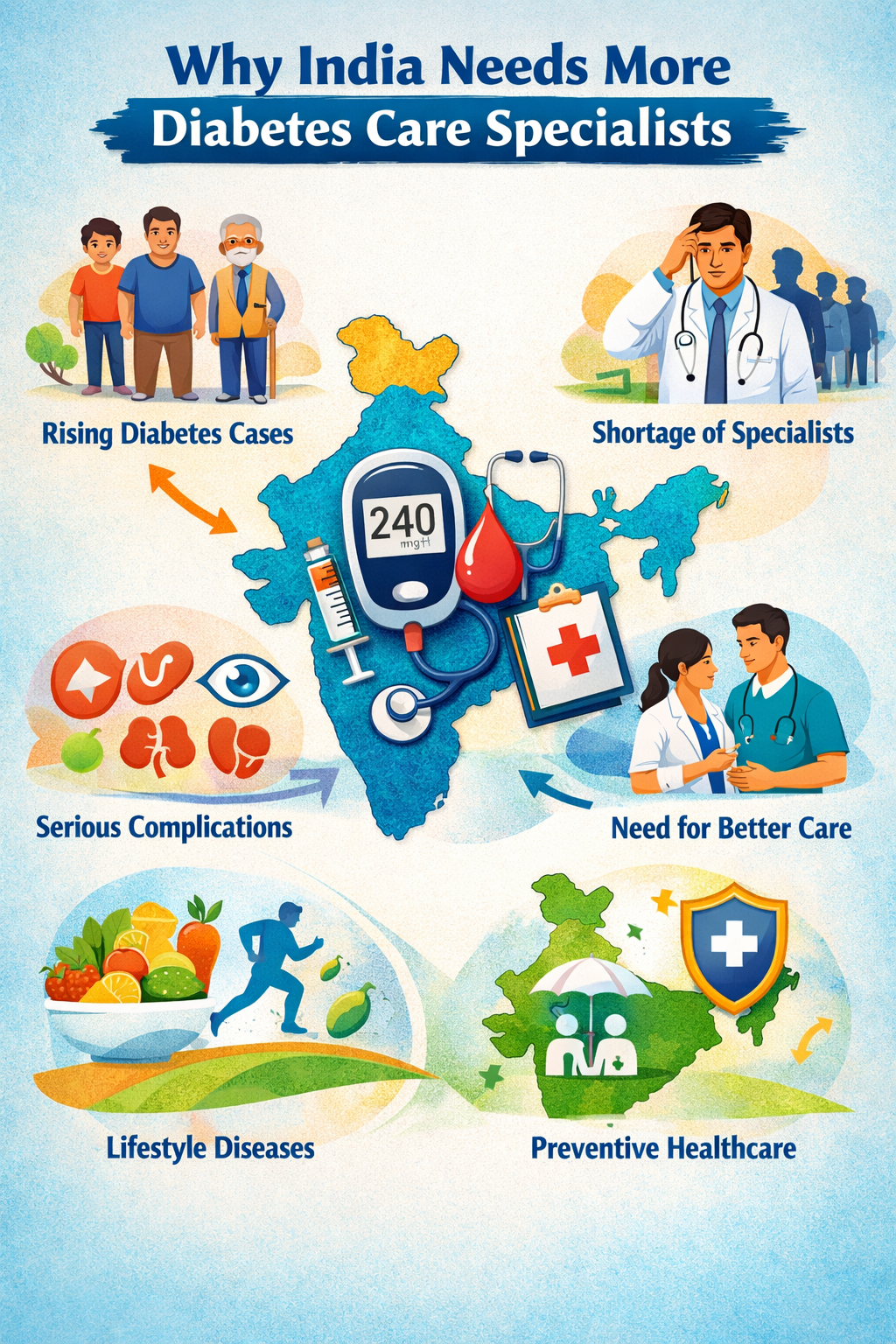
India is facing a rapidly growing health challenge that demands urgent attention—the rising burden of diabetes. Often called the “diabetes capital of the world,” India has witnessed a sharp increase in lifestyle-related diseases over the past two decades. This growing health crisis has created an urgent need for trained professionals in Diabetology who can support prevention, diagnosis, management, and long-term patient care.
Today, healthcare systems across the country require more diabetes care specialists than ever before to manage this expanding epidemic effectively.
The Growing Diabetes Burden in India
Diabetes is no longer limited to older adults. It is increasingly affecting young professionals, middle-aged individuals, and even adolescents. Rapid urbanization, sedentary lifestyles, stress, unhealthy eating habits, and genetic risk factors are major contributors to the rising number of cases.
Key concerns include:
- Rapid increase in Type 2 diabetes cases
- Rising incidence of prediabetes among young adults
- Increasing lifestyle-related risk factors
- Limited awareness about early diagnosis
- Growing burden of diabetes-related complications
This situation highlights the importance of strengthening India’s diabetes care workforce.
Why Diabetes Care Specialists Are So Important Today
Managing diabetes requires more than prescribing medication. It involves continuous monitoring, patient education, lifestyle counseling, complication prevention, and long-term follow-up care.
Diabetes care specialists play a vital role in:
- Early detection of diabetes
- Preventing complications through timely intervention
- Guiding patients on nutrition and lifestyle changes
- Supporting insulin therapy management
- Monitoring high-risk patients regularly
Without trained specialists, patients often experience delayed diagnosis and poor disease control.
India Faces a Shortage of Trained Diabetes Care Professionals
Although diabetes cases are increasing rapidly, the number of trained diabetes care specialists remains limited in comparison to patient demand.
This gap creates challenges such as:
- Overburdened physicians
- Long waiting times in specialty clinics
- Delayed diagnosis and treatment
- Poor patient counseling support
- Higher risk of preventable complications
Strengthening specialized diabetes training programs can help bridge this gap effectively.
Rising Lifestyle Diseases Are Increasing the Need for Specialists
Lifestyle diseases such as obesity, hypertension, and cardiovascular disorders are closely linked with diabetes. These conditions often occur together and require coordinated clinical management.
Healthcare professionals trained in diabetes care can help:
- Identify high-risk individuals early
- Promote preventive health strategies
- Improve long-term disease outcomes
- Reduce hospital admissions related to complications
This makes specialized diabetes education increasingly valuable for healthcare providers.
Diabetes Complications Are a Major Public Health Concern
Poorly managed diabetes can lead to serious long-term complications affecting multiple organs. These complications increase healthcare costs and reduce patient quality of life.
Common diabetes-related complications include:
- Heart disease
- Kidney failure
- Vision loss
- Nerve damage
- Diabetic foot conditions
Timely intervention by trained diabetes specialists can significantly reduce these risks.
Role of Diabetes Care Specialists in Preventive Healthcare
Preventive healthcare is becoming a major priority in India’s medical system. Diabetes specialists contribute not only to treatment but also to prevention strategies at both individual and community levels.
Their responsibilities often include:
- Conducting awareness programs
- Supporting lifestyle modification plans
- Screening high-risk populations
- Promoting early diagnosis initiatives
- Improving patient compliance with treatment plans
Preventive care plays a crucial role in reducing the long-term burden of diabetes nationwide.
Expanding Career Opportunities in Diabetes Care
As diabetes cases increase across India, healthcare institutions are actively seeking trained professionals with expertise in diabetes management.
Career opportunities are available in:
- Hospitals and specialty clinics
- Diabetes care centers
- Public health programs
- Community healthcare projects
- Research institutions
- Preventive health organizations
This makes diabetes care specialization a promising career pathway for healthcare professionals.
How Specialized Diabetes Training Improves Patient Outcomes
Structured training in diabetes management helps healthcare professionals deliver better patient care. It strengthens their ability to support diagnosis, treatment planning, and follow-up care effectively.
Benefits of specialized diabetes education include:
- Better clinical decision-making
- Improved patient counseling skills
- Enhanced treatment planning knowledge
- Stronger understanding of lifestyle interventions
- Greater confidence in managing complications
Such expertise contributes directly to improved healthcare delivery.
Importance of Strengthening India’s Diabetes Care Workforce
India’s healthcare system is expanding rapidly, but managing lifestyle diseases requires skilled professionals with specialized knowledge.
Increasing the number of trained diabetes care specialists can help:
- Improve early diagnosis rates
- Reduce long-term complications
- Strengthen preventive healthcare systems
- Support community awareness programs
- Improve overall patient quality of life
Investing in diabetes care education is therefore essential for the future of healthcare in India.
Building a Career in Diabetes Care with Specialized Training
Healthcare professionals interested in advancing their clinical skills can benefit significantly from structured diabetes care education programs. Specialized training enhances their ability to manage patients effectively while expanding their professional opportunities in hospitals and preventive healthcare settings.
Institutions like AIHMS (Athar Institute of Health and Management Studies) support healthcare professionals through career-focused programs designed to strengthen practical knowledge and disease-management skills.
To know more about healthcare career advancement opportunities and specialized training programs, log on to www.aihms.in.
