
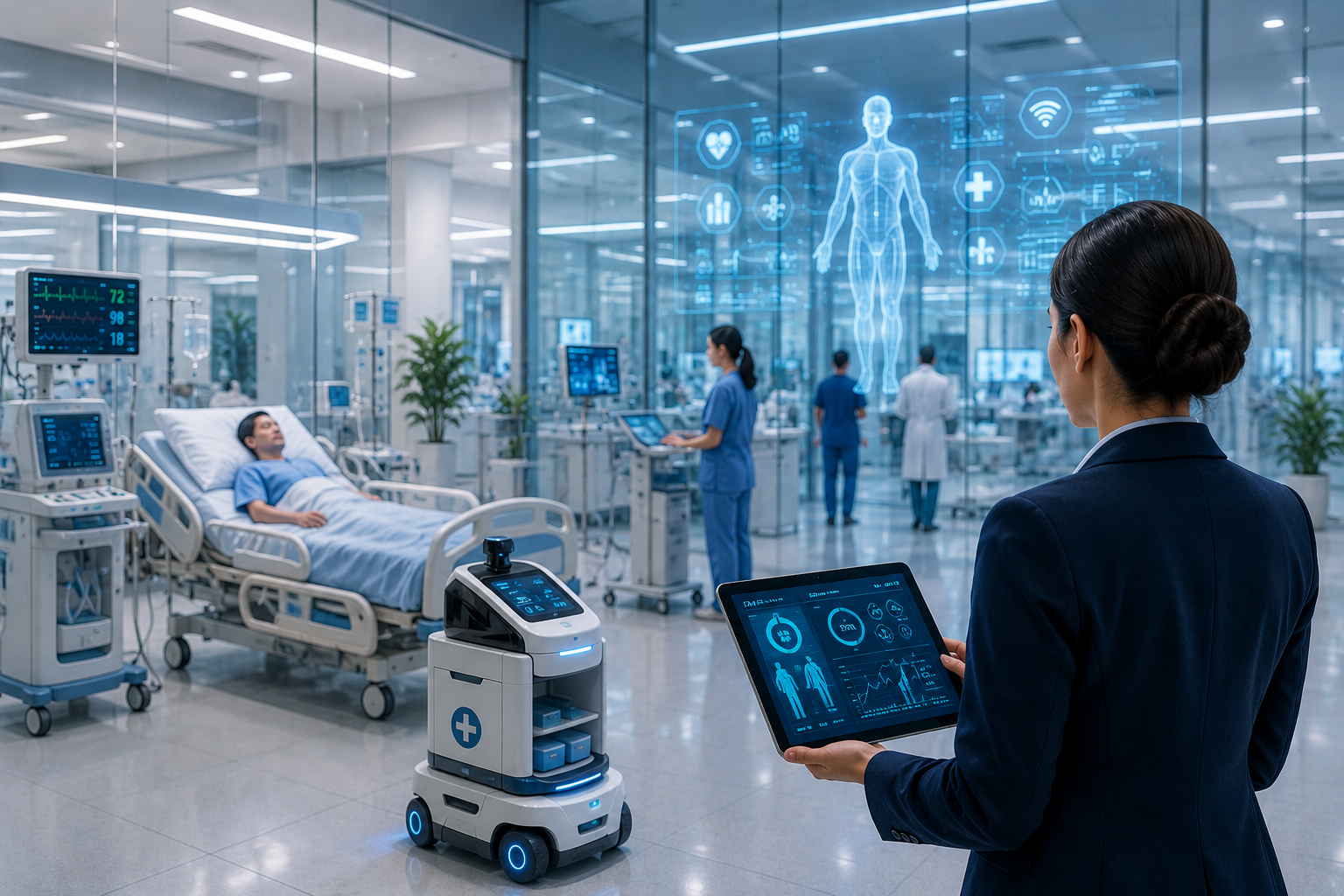
Healthcare is undergoing a technological revolution. From artificial intelligence and robotic surgery to Internet of Things (IoT)-enabled devices and real-time patient monitoring systems, hospitals are rapidly evolving into highly connected, data-driven healthcare ecosystems. These next-generation facilities, often referred to as Smart Hospitals, are reshaping the way healthcare is delivered, managed, and experienced.
While advanced technologies often receive most of the attention, the success of smart hospitals depends equally on effective leadership and management. This is where healthcare administrators play a critical role.
As healthcare systems become more digital and complex, healthcare administrators are emerging as key decision-makers who bridge the gap between technology, patient care, and organizational performance.
In this article, we explore the future of smart hospitals and the evolving role of healthcare administrators in this exciting transformation.
What Is a Smart Hospital?
A smart hospital is a healthcare facility that uses advanced digital technologies to improve operational efficiency, patient outcomes, safety, and overall healthcare delivery.
These hospitals integrate technologies such as:
- Artificial Intelligence (AI)
- Internet of Things (IoT)
- Electronic Health Records (EHR)
- Telemedicine platforms
- Robotics and automation
- Healthcare analytics
- Cloud computing
- Wearable health devices
- Smart medical equipment
The goal is simple: deliver better patient care while improving operational efficiency and reducing healthcare costs.
Why Smart Hospitals Are the Future of Healthcare
Healthcare systems worldwide face significant challenges, including rising patient expectations, workforce shortages, increasing healthcare costs, and growing disease burdens.
Smart hospitals help address these challenges by enabling:
Improved Patient Care
Real-time monitoring systems allow healthcare professionals to identify health issues earlier and respond more quickly.
Enhanced Patient Experience
Digital appointment scheduling, online consultations, electronic records, and automated service systems create a more convenient patient journey.
Better Clinical Decision-Making
Artificial intelligence and healthcare analytics help clinicians make faster and more informed decisions.
Operational Efficiency
Automation reduces administrative workload and minimizes errors, allowing healthcare teams to focus more on patient care.
Data-Driven Healthcare
Smart hospitals collect and analyze large volumes of healthcare data, enabling better planning, forecasting, and resource allocation.
Key Technologies Powering Smart Hospitals
Artificial Intelligence (AI)
AI is transforming healthcare through predictive analytics, clinical decision support, diagnostic assistance, and workflow optimization.
Examples include:
- Disease risk prediction
- AI-assisted radiology
- Clinical decision support systems
- Patient flow optimization
Internet of Things (IoT)
IoT devices enable real-time monitoring of patients, equipment, and hospital environments.
Applications include:
- Smart patient monitoring
- Asset tracking
- Smart beds
- Medication management systems
Telemedicine
Telehealth services allow healthcare providers to consult with patients remotely, improving access to care and reducing hospital congestion.
Electronic Health Records (EHR)
Digital patient records improve communication among healthcare professionals and ensure continuity of care.
Robotics and Automation
Hospitals are increasingly using robots for:
- Surgical assistance
- Medication delivery
- Laboratory automation
- Disinfection and sanitation
The Growing Importance of Healthcare Administrators
As hospitals become smarter, managing these sophisticated systems becomes more challenging. Healthcare administrators are no longer responsible only for traditional hospital operations.
Today’s healthcare leaders must understand both healthcare management and healthcare technology.
Their role has expanded significantly in the digital era.
How Healthcare Administrators Drive Smart Hospital Success
Strategic Technology Planning
Healthcare administrators help determine which technologies align with organizational goals.
Before investing in digital systems, administrators evaluate:
- Cost-effectiveness
- Patient benefits
- Staff readiness
- Return on investment
- Regulatory requirements
Their decisions influence the long-term success of smart hospital initiatives.
Change Management Leadership
Technology implementation often requires significant organizational change.
Healthcare administrators lead efforts to:
- Train employees
- Manage resistance to change
- Develop implementation strategies
- Ensure smooth adoption of new systems
Without strong leadership, even the best technology can fail.
Data Governance and Security
Smart hospitals generate enormous amounts of sensitive patient data.
Healthcare administrators play a crucial role in:
- Data privacy management
- Cybersecurity compliance
- Regulatory adherence
- Information governance
Protecting patient information has become one of the most important responsibilities in digital healthcare.
Resource Management
Healthcare administrators ensure that technology investments deliver measurable value.
They oversee:
- Budget allocation
- Vendor management
- Workforce planning
- Infrastructure development
Effective resource management helps maximize operational efficiency.
New Skills Required for Future Healthcare Administrators
The administrators of tomorrow must possess a blend of management expertise and digital literacy.
Key competencies include:
Digital Health Knowledge
Understanding healthcare technologies is becoming essential for leadership roles.
Data Analytics
Administrators increasingly rely on healthcare data to make informed decisions and improve performance.
Strategic Thinking
Healthcare leaders must anticipate future trends and adapt organizational strategies accordingly.
Innovation Management
The ability to evaluate and implement innovative healthcare solutions will become a major competitive advantage.
Cybersecurity Awareness
Protecting healthcare data is now a critical leadership responsibility.
Challenges Facing Smart Hospitals
Despite their benefits, smart hospitals face several challenges.
High Implementation Costs
Technology infrastructure requires significant investment.
Staff Training Requirements
Healthcare workers must learn to use new systems effectively.
Cybersecurity Risks
As hospitals become more connected, they become more vulnerable to cyber threats.
Regulatory Compliance
Healthcare organizations must ensure compliance with privacy and healthcare regulations.
Technology Integration
Integrating multiple digital systems into a seamless healthcare environment can be complex.
Healthcare administrators are responsible for navigating these challenges while maintaining high-quality patient care.
Career Opportunities in Smart Hospital Management
The rise of smart hospitals is creating exciting career opportunities for healthcare management professionals.
Emerging roles include:
- Digital Health Manager
- Healthcare Operations Manager
- Health Informatics Specialist
- Hospital Administrator
- Healthcare Technology Coordinator
- Quality and Innovation Manager
- Healthcare Analytics Manager
- Telehealth Program Manager
- Smart Hospital Project Manager
- Chief Digital Health Officer
These positions combine healthcare knowledge, technology expertise, and management skills.
Why Healthcare Management Education Is More Important Than Ever
As healthcare becomes increasingly technology-driven, organizations need professionals who understand both management principles and healthcare systems.
Programs such as:
- Master of Hospital Administration (MHA)
- Healthcare Management Programs
- Public Health and Digital Health Certifications
can prepare future leaders for smart hospital environments.
Healthcare education is evolving to include topics such as:
- Health Informatics
- Digital Transformation
- Healthcare Analytics
- Quality Management
- Healthcare Technology Management
The Future of Smart Hospitals in India
India is rapidly embracing digital healthcare through initiatives such as:
- Digital Health Mission
- Telemedicine expansion
- AI-powered diagnostics
- Smart healthcare infrastructure
- Electronic health record adoption
The healthcare sector is expected to witness substantial investment in technology-driven healthcare delivery over the coming decade.
As hospitals continue to modernize, the demand for skilled healthcare administrators will increase significantly.
Organizations will seek professionals who can manage technology, improve patient outcomes, optimize operations, and lead digital transformation initiatives.
Conclusion
The future of healthcare is smart, connected, and data-driven.
While technologies such as artificial intelligence, telemedicine, IoT, and healthcare analytics are transforming hospitals, technology alone cannot guarantee success. Effective leadership remains essential.
Healthcare administrators are becoming the architects of modern healthcare systems. They ensure that technology serves its ultimate purpose: improving patient care and healthcare outcomes.
As smart hospitals continue to grow across India and around the world, healthcare administrators will play an increasingly vital role in shaping the future of healthcare delivery.
For students and professionals considering a career in healthcare management, the rise of smart hospitals presents a unique opportunity to become leaders in one of the most exciting transformations in modern healthcare.
Frequently Asked Questions (FAQs)
What is a smart hospital?
A smart hospital uses advanced technologies such as AI, IoT, telemedicine, robotics, and healthcare analytics to improve patient care and operational efficiency.
Why are smart hospitals important?
Smart hospitals enhance patient outcomes, reduce operational costs, improve efficiency, and support data-driven healthcare decision-making.
What role do healthcare administrators play in smart hospitals?
Healthcare administrators oversee technology implementation, manage digital transformation, ensure regulatory compliance, and optimize healthcare operations.
What skills are needed for smart hospital management?
Key skills include digital health knowledge, leadership, healthcare analytics, strategic planning, cybersecurity awareness, and change management.
Is healthcare management a good career in the era of smart hospitals?
Yes. The growth of smart hospitals is creating strong demand for healthcare management professionals who can lead digital transformation and healthcare innovation.
