
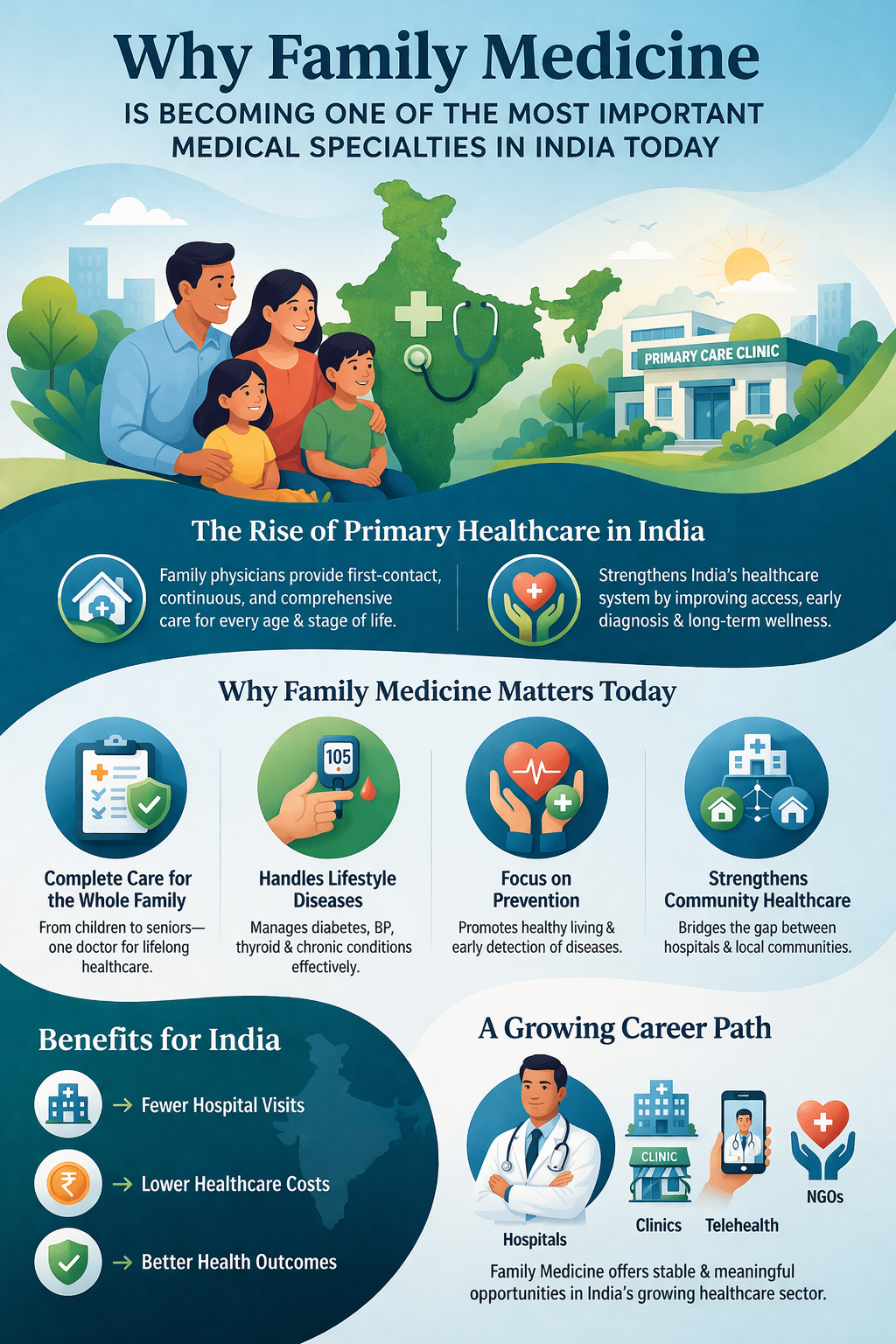
India’s healthcare system is evolving rapidly. Alongside the growth of hospitals, specialty centers, and diagnostic facilities, there is a rising recognition of the importance of strong primary healthcare. At the center of this transformation is Family Medicine — a discipline that focuses on comprehensive, continuous, and community-based patient care.
Today, family medicine is emerging as one of the most essential medical specialties in India because it strengthens healthcare accessibility, improves early diagnosis, and supports long-term patient wellbeing across all age groups.
The Growing Importance of Primary Healthcare in India 🇮🇳
India’s healthcare needs are changing. While tertiary hospitals continue to expand, the real challenge lies in delivering effective healthcare at the community and primary-care levels.
Family medicine specialists play a vital role by:
- Providing first-contact medical care
- Managing chronic diseases
- Supporting preventive healthcare
- Reducing unnecessary hospital admissions
- Coordinating referrals to specialists when required
A strong primary-care system reduces healthcare costs and improves outcomes for patients nationwide.
What Makes Family Medicine Different from Other Specialties
Unlike organ-based specialties, family medicine focuses on whole-person care across all age groups. Family physicians manage patients throughout their lives and often treat multiple conditions within the same household.
They are trained to handle:
- Acute illnesses
- Chronic disease management
- Preventive health screenings
- Lifestyle counseling
- Pediatric and geriatric care
- Women’s health concerns
This broad skill set makes family medicine one of the most versatile and impactful specialties in modern healthcare systems.
Rising Burden of Lifestyle Diseases Is Increasing Demand
India is experiencing a rapid increase in lifestyle-related illnesses such as:
- Diabetes
- Hypertension
- Heart disease
- Obesity
- Thyroid disorders
Managing these conditions requires continuous monitoring rather than one-time treatment. Family physicians play a crucial role in long-term disease management and patient counseling.
Their involvement helps:
- Improve treatment adherence
- Detect complications early
- Reduce hospital visits
- Promote healthier lifestyles
As lifestyle diseases increase, the need for trained family medicine professionals continues to grow 📈.
Family Physicians Strengthen Community Healthcare Systems
Family medicine specialists serve as a bridge between communities and hospitals. They ensure that patients receive timely treatment before conditions become severe.
Their responsibilities often include:
- Early diagnosis of diseases
- Preventive healthcare counseling
- Vaccination guidance
- Maternal and child health support
- Elderly patient care
This community-level engagement improves healthcare access, especially in semi-urban and rural regions.
Family Medicine Reduces Pressure on Hospitals
One of the biggest challenges in India’s healthcare system is overcrowding in hospitals. Many patients visit tertiary centers for conditions that can be treated at the primary-care level.
Family physicians help reduce this burden by:
- Managing routine illnesses locally
- Monitoring chronic patients regularly
- Providing preventive care services
- Referring only complex cases to specialists
This improves healthcare efficiency across the system.
Increasing Career Opportunities for Family Medicine Professionals
As India strengthens its primary healthcare infrastructure, the demand for family physicians is rising in both public and private healthcare sectors.
Career opportunities are available in:
- Community health centers
- Private clinics
- Hospitals
- Telemedicine platforms
- Preventive healthcare programs
- Corporate health services
- NGOs and rural healthcare initiatives
Family medicine professionals also enjoy flexible career pathways and long-term job stability.
Role of Family Medicine in Preventive Healthcare 🩺
Preventive healthcare is becoming a national priority. Family physicians are at the forefront of this movement because they guide patients before illnesses become serious.
They support preventive care through:
- Health risk assessments
- Routine screenings
- Vaccination awareness
- Lifestyle counseling
- Nutrition guidance
This approach improves overall public health outcomes while reducing treatment costs.
Why India Needs More Family Medicine Specialists Today
Despite the increasing healthcare demand, India still faces a shortage of trained primary-care physicians. Expanding family medicine education can significantly strengthen the country’s healthcare delivery system.
More specialists in this field can help:
- Improve early disease detection
- Reduce complications from chronic illnesses
- Strengthen rural healthcare services
- Enhance continuity of patient care
- Support preventive health programs nationwide
Investing in family medicine training is essential for building a stronger healthcare future.
Building a Career in Family Medicine with Specialized Training 🎓
Healthcare professionals interested in expanding their clinical capabilities can benefit greatly from structured training in family medicine. Specialized programs help doctors improve diagnostic confidence, patient communication skills, and long-term disease management strategies.
Institutions like AIHMS (Athar Institute of Health and Management Studies) support healthcare professionals through career-focused training designed to strengthen primary-care expertise and community healthcare delivery.
To know more about Family Medicine and other healthcare career advancement programs, log on to www.aihms.in.
Conclusion
Family medicine is rapidly becoming one of the most important medical specialties in India because it strengthens primary healthcare systems, supports preventive medicine, and improves long-term patient outcomes. As lifestyle diseases continue to rise and healthcare access becomes a national priority, trained family physicians will play a critical role in shaping the future of healthcare delivery.
Healthcare professionals choosing this specialization are not only building strong careers—they are also contributing meaningfully to the health of communities across the country.
For more details about healthcare training opportunities and career-focused programs, visit www.aihms.in.
