
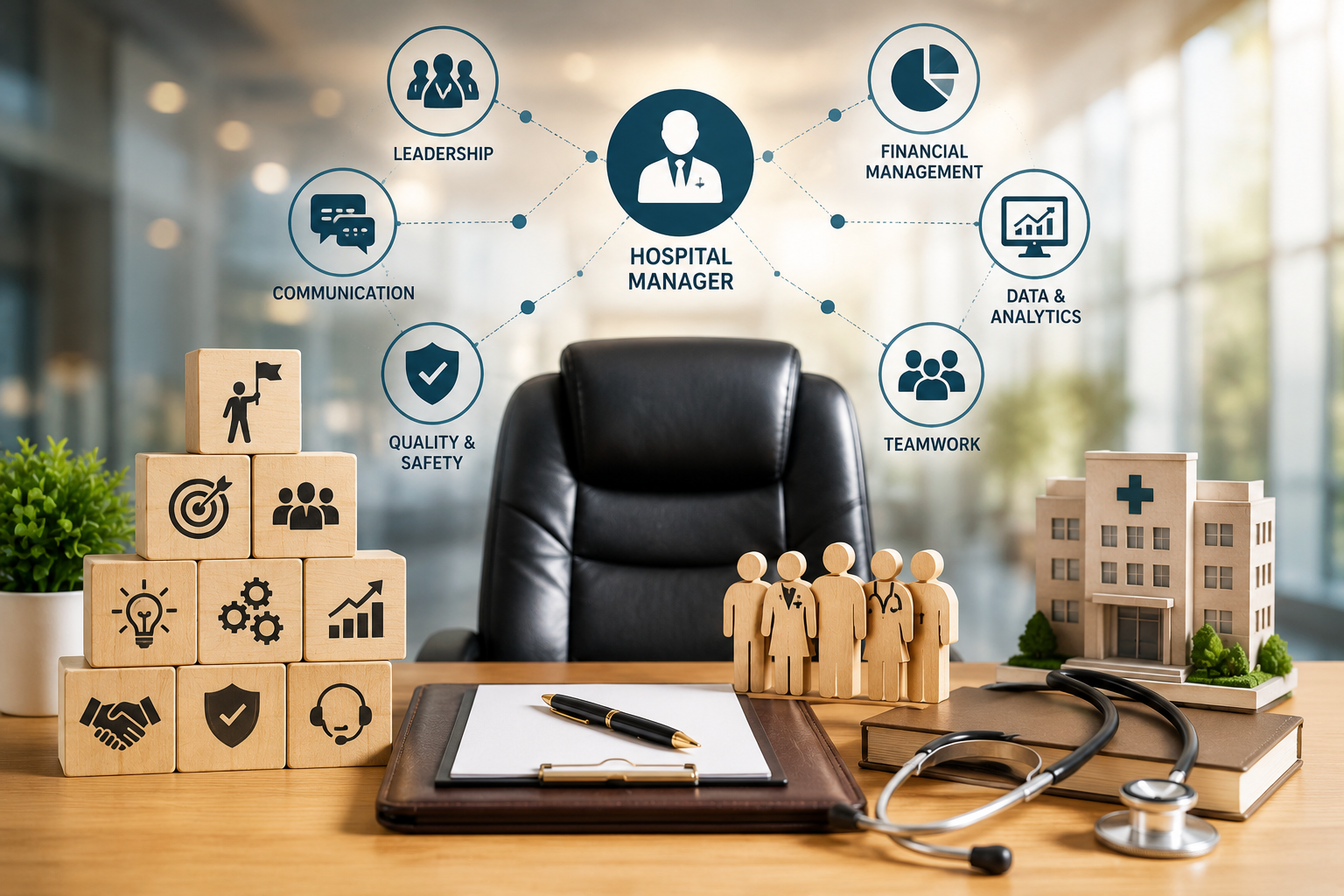
The healthcare industry is evolving rapidly, driven by technological advancements, increasing patient expectations, stricter quality standards, and growing operational challenges. Behind every well-functioning hospital is a team of healthcare professionals—and at the center of that team is a hospital manager.
Hospital managers play a crucial role in ensuring that healthcare organizations deliver high-quality patient care while maintaining operational efficiency, financial sustainability, and regulatory compliance. Their responsibilities extend far beyond administration; they are leaders, strategists, problem-solvers, and innovators.
But what separates an average hospital manager from an exceptional one?
The answer lies in developing the right combination of technical knowledge, leadership qualities, and interpersonal skills.
In this article, we explore the essential skills every successful hospital manager must have to thrive in today’s dynamic healthcare environment.
Why Skills Matter in Hospital Management
Hospitals are among the most complex organizations to manage. Every day involves coordinating doctors, nurses, technicians, administrative staff, patients, insurance providers, suppliers, and government regulations.
A successful hospital manager must balance:
- Patient care and satisfaction
- Operational efficiency
- Financial performance
- Staff management
- Regulatory compliance
- Technology adoption
- Crisis response
Without the right skills, managing these responsibilities becomes extremely challenging.
1. Leadership Skills
Leadership is the foundation of effective hospital management.
Hospital managers supervise multidisciplinary teams consisting of healthcare professionals, administrative staff, technicians, and support personnel. Strong leadership helps create a culture of collaboration, accountability, and continuous improvement.
A good leader can:
- Inspire teams
- Resolve conflicts
- Motivate employees
- Improve organizational culture
- Build trust among staff
Leadership is not about giving orders—it is about empowering people to achieve common healthcare goals.
2. Excellent Communication Skills
Healthcare depends on effective communication.
Hospital managers interact daily with:
- Doctors
- Nurses
- Patients
- Families
- Government agencies
- Insurance companies
- Vendors
- Senior management
Clear communication reduces misunderstandings, improves teamwork, and enhances patient satisfaction.
Successful managers know how to:
- Listen actively
- Communicate clearly
- Handle difficult conversations
- Present ideas confidently
- Build professional relationships
3. Strategic Thinking
Healthcare organizations operate in a constantly changing environment.
Hospital managers must think beyond day-to-day operations and plan for the future.
Strategic thinking includes:
- Long-term planning
- Risk assessment
- Resource allocation
- Service expansion
- Technology investment
- Market analysis
Strong strategic leaders prepare hospitals for future challenges rather than simply reacting to problems.
4. Financial Management Skills
Hospitals must deliver quality care while remaining financially sustainable.
Hospital managers should understand:
- Budget planning
- Revenue management
- Cost control
- Financial reporting
- Procurement
- Resource optimization
Good financial decisions allow hospitals to invest in better technology, infrastructure, and patient services.
5. Decision-Making Ability
Every hospital faces unexpected situations.
Managers frequently make decisions regarding:
- Emergency operations
- Staffing issues
- Equipment purchases
- Patient safety
- Crisis management
- Operational improvements
Effective decision-making requires:
- Data analysis
- Critical thinking
- Clinical awareness
- Risk evaluation
- Confidence under pressure
Timely decisions often improve patient outcomes and organizational performance.
6. Problem-Solving Skills
Healthcare environments are filled with challenges.
Examples include:
- Staff shortages
- Equipment failures
- Patient complaints
- Scheduling conflicts
- Regulatory issues
- Supply chain disruptions
Successful hospital managers identify root causes rather than treating symptoms.
They focus on:
- Analyzing problems
- Finding practical solutions
- Preventing recurrence
- Continuous improvement
7. Digital and Technology Skills
Modern hospitals rely heavily on technology.
Healthcare managers should understand:
- Hospital Information Systems (HIS)
- Electronic Health Records (EHR)
- Telemedicine
- Artificial Intelligence (AI)
- Healthcare analytics
- Digital patient management
- Medical software systems
Digital literacy has become one of the most valuable skills in healthcare management.
Managers who embrace innovation help hospitals improve efficiency and patient care.
8. Human Resource Management
People are the most valuable asset in healthcare.
Hospital managers oversee recruitment, training, performance management, employee engagement, and workforce planning.
Strong HR skills help managers:
- Build high-performing teams
- Reduce staff turnover
- Improve employee satisfaction
- Foster professional development
- Create a positive workplace culture
A motivated workforce ultimately delivers better patient care.
9. Time Management and Organizational Skills
Hospitals operate 24 hours a day, seven days a week.
Hospital managers often handle multiple responsibilities simultaneously.
Effective time management enables them to:
- Prioritize tasks
- Meet deadlines
- Coordinate departments
- Reduce delays
- Improve productivity
Organized managers create more efficient healthcare systems.
10. Emotional Intelligence (EQ)
Healthcare is a people-centered profession.
Hospital managers deal with employees under stress, anxious patients, grieving families, and challenging situations.
Emotional intelligence helps managers:
- Understand emotions
- Show empathy
- Build trust
- Resolve conflicts
- Strengthen teamwork
Leaders with high emotional intelligence create healthier workplace environments.
11. Quality Management and Patient Safety
Delivering safe, high-quality healthcare is one of every hospital’s primary goals.
Managers should understand:
- NABH standards
- Patient safety protocols
- Infection control
- Quality improvement programs
- Clinical governance
- Risk management
Continuous quality improvement strengthens both patient outcomes and organizational reputation.
12. Adaptability and Change Management
Healthcare changes rapidly.
New technologies, regulations, treatment methods, and patient expectations require hospitals to evolve continuously.
Hospital managers must be comfortable with change.
Adaptable leaders:
- Encourage innovation
- Support digital transformation
- Train staff effectively
- Manage organizational transitions
- Lead change with confidence
13. Healthcare Law and Ethics
Hospital managers should understand legal and ethical responsibilities.
This includes:
- Patient confidentiality
- Healthcare regulations
- Medical ethics
- Consent procedures
- Data privacy
- Accreditation requirements
Strong ethical leadership builds public trust and protects healthcare organizations.
14. Data Analytics and Evidence-Based Management
Today’s healthcare decisions are increasingly data-driven.
Hospital managers should know how to interpret:
- Patient satisfaction reports
- Financial dashboards
- Operational metrics
- Infection rates
- Bed occupancy
- Quality indicators
Using data helps managers make informed decisions instead of relying on assumptions.
15. Crisis and Disaster Management
Hospitals must be prepared for emergencies.
Examples include:
- Pandemics
- Natural disasters
- Fire emergencies
- Cybersecurity incidents
- Mass casualty events
Successful managers develop emergency response plans, coordinate resources, and ensure business continuity during crises.
How Can You Develop These Skills?
Fortunately, these competencies can be learned through education and practical experience.
Healthcare management programs such as:
- Masters in Hospital Administration (MHA)
- Healthcare Management Certifications
- Hospital Administration Training Programs
provide structured learning in leadership, finance, operations, healthcare quality, digital health, and strategic management.
Internships, hospital projects, workshops, and continuous professional development further strengthen these skills.
Career Benefits of Strong Hospital Management Skills
Developing these competencies can open doors to positions such as:
- Hospital Administrator
- Healthcare Operations Manager
- Quality Manager
- Healthcare Consultant
- Medical Superintendent (Administrative)
- Hospital CEO
- Healthcare Project Manager
- Digital Health Manager
As hospitals continue to modernize, skilled managers will remain in high demand across public and private healthcare sectors.
Conclusion
Hospital management is far more than overseeing daily operations. It is about leading people, improving healthcare delivery, managing resources efficiently, and ensuring that patients receive the highest standard of care.
The most successful hospital managers combine leadership, communication, financial expertise, strategic thinking, emotional intelligence, and digital knowledge to navigate the challenges of modern healthcare.
As the healthcare industry continues to evolve, professionals who invest in developing these essential skills will be well-positioned to lead hospitals into the future.
Whether you are a student, healthcare professional, or aspiring administrator, building these competencies today can help you become the healthcare leader of tomorrow.
Frequently Asked Questions (FAQs)
1. What skills are most important for a hospital manager?
Leadership, communication, financial management, strategic thinking, problem-solving, digital literacy, emotional intelligence, and quality management are among the most important skills.
2. Can non-medical graduates become hospital managers?
Yes. Many hospital management programs are open to graduates from commerce, management, engineering, arts, and other non-medical backgrounds.
3. Why is leadership important in hospital management?
Leadership helps coordinate multidisciplinary teams, improve employee engagement, enhance patient care, and achieve organizational goals.
4. Do hospital managers need technology skills?
Yes. Knowledge of Hospital Information Systems (HIS), Electronic Health Records (EHR), telemedicine, AI, and healthcare analytics is increasingly important.
5. How can I develop hospital management skills?
You can develop these skills through specialized programs such as MHA, healthcare certifications, internships, workshops, and practical hospital experience.
