
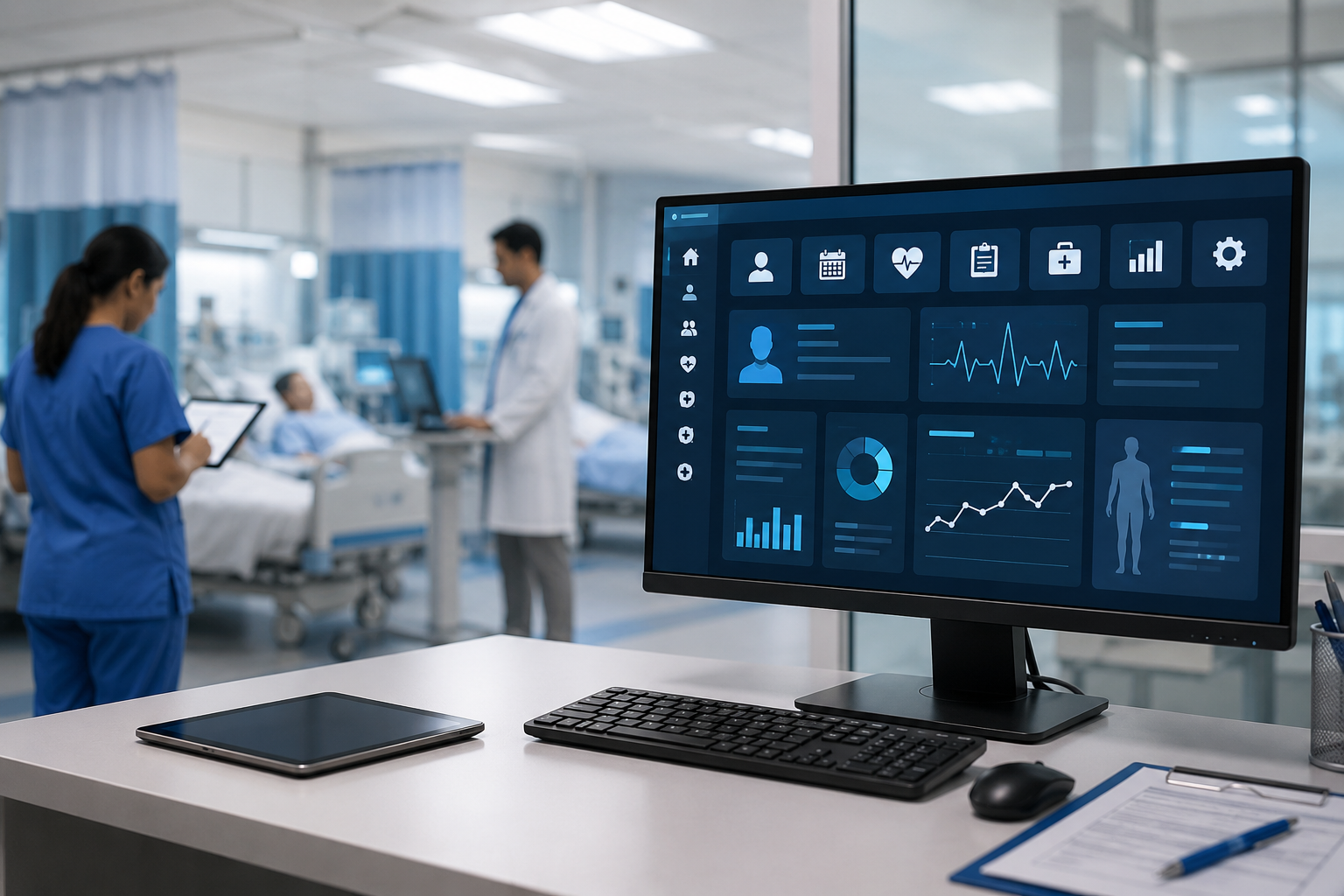
Healthcare is becoming increasingly digital. Gone are the days when hospitals relied entirely on paper files, handwritten prescriptions, and manual billing systems. Today, hospitals generate enormous amounts of patient information every day—from medical histories and laboratory reports to pharmacy records and insurance claims. Managing all this information efficiently requires a robust digital system.
This is where a Hospital Information System (HIS) plays a vital role.
Whether you are a hospital administrator, doctor, nurse, healthcare professional, or a student considering a career in hospital administration, understanding Hospital Information Systems has become essential. Hospitals of every size—from small clinics to large multi-specialty institutions—depend on HIS to improve patient care, reduce errors, streamline operations, and make informed decisions.
In this guide, we’ll explore what a Hospital Information System is, how it works, its key components, benefits, challenges, and why professionals trained in healthcare management are increasingly expected to understand these systems.
What is a Hospital Information System (HIS)?
A Hospital Information System (HIS) is an integrated software platform that manages the administrative, financial, clinical, and operational activities of a hospital.
Instead of maintaining separate records for registration, billing, laboratory tests, pharmacy, appointments, and patient history, an HIS connects all departments into one centralized system.
It allows healthcare professionals to access accurate information in real time, improving coordination and enabling faster, more informed decisions.
Simply put, an HIS serves as the digital backbone of a modern hospital.
Why Do Hospitals Need an HIS?
Hospitals handle thousands of daily activities, such as:
- Patient registration
- Doctor appointments
- Laboratory investigations
- Pharmacy inventory
- Billing and insurance
- Electronic medical records
- Staff scheduling
- Bed management
- Financial reporting
- Quality monitoring
Managing these processes manually increases the risk of delays, duplication, and human error. A Hospital Information System automates routine tasks, ensuring information flows seamlessly across departments.
Key Components of a Hospital Information System
A comprehensive HIS typically includes several integrated modules.
- Patient Registration System
This module records patient demographics, unique identification numbers, contact details, and medical history. It ensures that patient information is stored securely and can be retrieved quickly during future visits.
- Electronic Medical Records (EMR)
EMR stores clinical information such as:
- Diagnoses
- Treatment plans
- Prescriptions
- Progress notes
- Allergies
- Previous admissions
- Imaging reports
Doctors can access patient records instantly, reducing treatment delays and minimizing medical errors.
- Appointment Management
Patients can book appointments online or through the hospital reception. The system automatically schedules consultations and helps reduce waiting times.
- Laboratory Information System (LIS)
The laboratory module manages:
- Sample collection
- Test requests
- Report generation
- Quality control
- Digital report sharing
Doctors receive laboratory results directly within the patient’s medical record.
- Pharmacy Management
The pharmacy module handles:
- Medicine inventory
- Prescription verification
- Stock alerts
- Purchase management
- Drug dispensing
This reduces medication errors and prevents stock shortages.
- Billing and Insurance
An HIS automates:
- Patient billing
- Insurance claims
- Payment tracking
- Revenue management
Accurate billing improves financial transparency and reduces administrative workload.
- Radiology Information System (RIS)
Radiology departments use this module for:
- X-rays
- CT scans
- MRI
- Ultrasound scheduling
- Digital image storage
Radiologists can quickly share reports with treating physicians.
- Human Resource Management
Hospitals also manage large teams of healthcare professionals.
The HR module helps with:
- Attendance
- Payroll
- Shift scheduling
- Leave management
- Performance tracking
- Inventory Management
Hospitals consume thousands of medical supplies daily.
Inventory management tracks:
- Surgical supplies
- Medical equipment
- Consumables
- Purchase orders
- Vendor management
- Reporting and Analytics
Hospital leadership relies on dashboards to monitor:
- Bed occupancy
- Revenue
- Infection rates
- Patient satisfaction
- Average length of stay
- Department performance
These insights support data-driven decision-making.
Types of Hospital Information Systems
Hospitals may choose different HIS models based on their size and needs.
On-Premises HIS
Installed on hospital-owned servers, offering greater control over data but requiring higher maintenance.
Cloud-Based HIS
Hosted online, providing scalability, remote access, and lower infrastructure costs.
Enterprise HIS
Designed for large hospital chains, integrating multiple facilities into a unified platform.
Specialty HIS
Tailored for specific healthcare settings such as eye hospitals, dental clinics, cancer centers, or maternity hospitals.
Benefits of Hospital Information Systems
Implementing an HIS offers significant advantages:
Improved Patient Care
Healthcare providers have instant access to complete patient records, leading to faster diagnoses and more coordinated treatment.
Reduced Medical Errors
Electronic prescriptions and standardized documentation reduce the likelihood of medication and documentation mistakes.
Better Communication
Departments such as laboratories, pharmacies, radiology, and billing share information seamlessly, reducing delays.
Operational Efficiency
Automation minimizes paperwork, speeds up workflows, and allows staff to focus more on patient care.
Financial Accuracy
Integrated billing and insurance modules reduce claim errors and improve revenue management.
Data Security
Modern HIS platforms incorporate encryption, user authentication, role-based access, and audit trails to protect sensitive patient information.
Regulatory Compliance
Hospitals can more easily comply with healthcare regulations and accreditation standards through structured documentation and reporting.
Challenges in Implementing HIS
Despite its advantages, implementing an HIS can present challenges:
- High initial investment
- Staff training requirements
- Resistance to change
- Data migration complexities
- Cybersecurity risks
- System downtime during upgrades
- Ongoing maintenance costs
Successful implementation requires careful planning, leadership support, and continuous staff training.
The Role of Hospital Administrators in HIS
Hospital administrators play a crucial role in ensuring the effective use of Hospital Information Systems. Their responsibilities often include:
- Evaluating HIS solutions
- Coordinating implementation across departments
- Managing budgets and vendor relationships
- Ensuring compliance with healthcare regulations
- Training staff on system usage
- Monitoring performance and data quality
- Using analytics for strategic planning
As hospitals become increasingly technology-driven, administrators who understand digital systems are highly valued.
Career Opportunities in Healthcare Information Systems
Professionals with knowledge of HIS can pursue roles such as:
- Hospital Administrator
- Healthcare Operations Manager
- Health Information Manager
- Hospital IT Coordinator
- Quality and Accreditation Executive
- Medical Records Manager
- Healthcare Data Analyst
- Clinical Informatics Coordinator
- Digital Health Consultant
- Health Technology Project Manager
These roles combine healthcare knowledge with technology and management skills.
Why HIS Knowledge Matters for Students
Students pursuing programs in Hospital Administration or Public Health benefit greatly from understanding HIS because employers increasingly expect graduates to be comfortable with digital healthcare systems.
Knowledge of HIS helps graduates:
- Understand hospital workflows
- Improve operational efficiency
- Analyze healthcare data
- Support quality improvement initiatives
- Contribute to digital transformation projects
This practical understanding enhances employability in hospitals, healthcare organizations, insurance companies, and public health agencies.
Learn Hospital Information Systems with AIHMS
Healthcare organizations are actively seeking professionals who can bridge the gap between clinical services and hospital operations. Programs such as a Master in Hospital Administration (MHA) equip students with the knowledge and practical skills needed to manage modern healthcare facilities, including exposure to digital healthcare systems like HIS.
If you’re looking to build a career in healthcare leadership, learning about Hospital Information Systems is a valuable step toward understanding how today’s hospitals operate efficiently and deliver high-quality patient care.
Frequently Asked Questions (FAQs)
What is a Hospital Information System (HIS)?
A Hospital Information System is integrated software that manages clinical, administrative, financial, and operational functions within a hospital.
What is the difference between HIS and EMR?
An HIS manages the entire hospital’s operations, while an Electronic Medical Record (EMR) focuses specifically on a patient’s clinical records.
Is HIS only used in large hospitals?
No. Small hospitals, specialty clinics, and diagnostic centers also use HIS solutions tailored to their needs.
Why is HIS important?
It improves patient care, enhances efficiency, reduces medical errors, streamlines communication, and supports data-driven decision-making.
Can Hospital Administration students work with HIS?
Yes. Hospital administrators are often responsible for selecting, implementing, monitoring, and optimizing Hospital Information Systems, making HIS knowledge a valuable career skill.
Conclusion
Hospital Information Systems have transformed the way healthcare organizations function. By integrating patient care, administration, finance, diagnostics, pharmacy, and analytics into one connected platform, HIS improves efficiency, enhances patient safety, and supports better clinical and operational decisions.
As digital healthcare continues to evolve, understanding HIS is no longer optional for healthcare managers—it is becoming a core competency. For students and professionals aiming to build careers in hospital administration, public health, or healthcare management, gaining familiarity with Hospital Information Systems provides a strong foundation for success in an increasingly technology-driven healthcare environment.
