
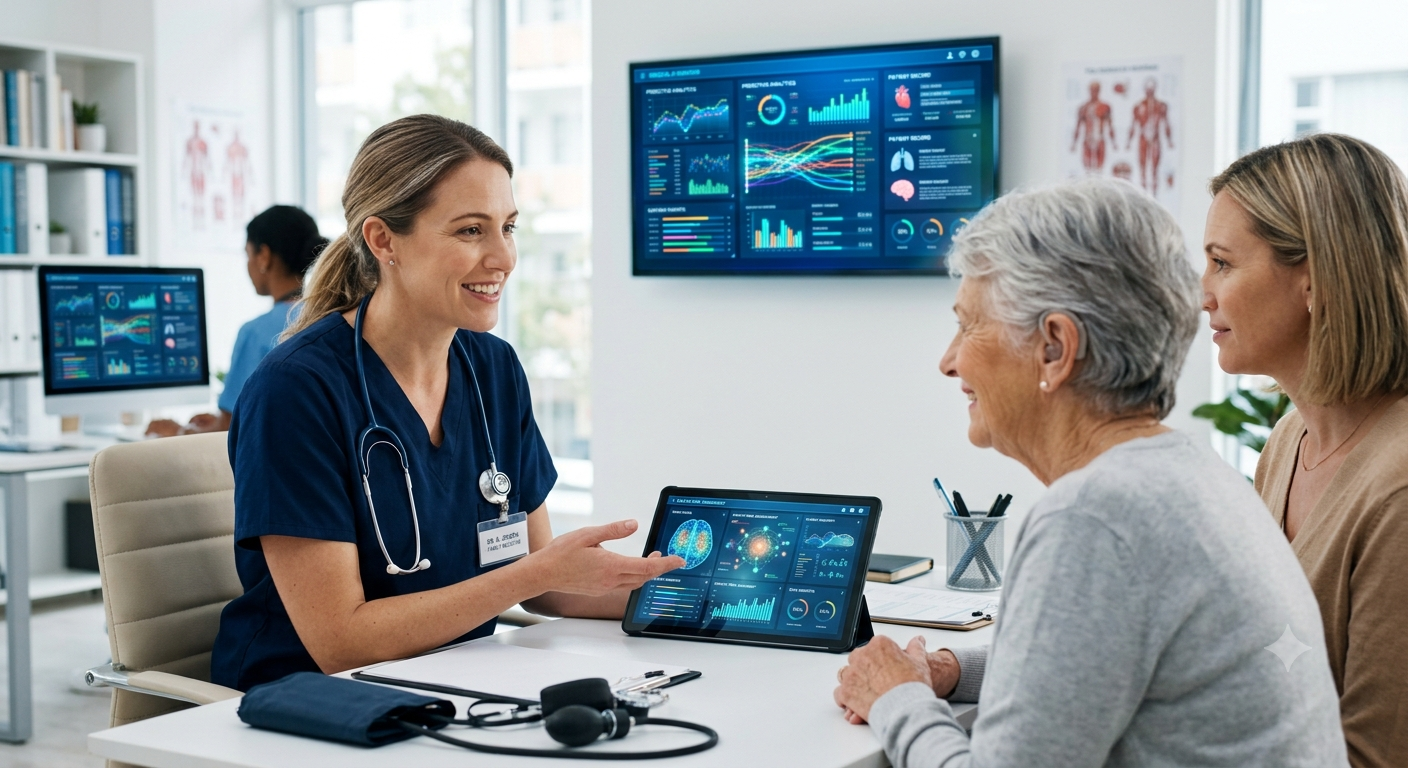
Primary healthcare is the first point of contact for millions of people seeking medical advice, preventive care, and treatment for common illnesses. From managing fever and respiratory infections to monitoring diabetes, hypertension, and other chronic conditions, family physicians play an essential role in keeping communities healthy.
However, doctors often face increasing patient loads, limited consultation time, incomplete medical histories, and the challenge of managing several health conditions simultaneously. Artificial Intelligence (AI) is emerging as a useful technology that can help address some of these challenges.
AI is changing how healthcare professionals analyse medical information, identify potential health risks, monitor patients, and deliver care. For family physicians, these developments offer opportunities to improve clinical workflows while maintaining the personal connection that makes family medicine unique.
For MBBS doctors considering specialised training, understanding AI alongside a PG Program in Family Medicine can be a valuable step towards preparing for the changing demands of primary healthcare.
What Is the Role of AI in Family Medicine?
Artificial Intelligence refers to computer systems that can analyse information, recognise patterns, and generate predictions or recommendations. In healthcare, AI applications range from medical image analysis and clinical documentation to risk prediction and decision-support tools.
Family medicine is particularly relevant to these developments because it involves a broad range of health conditions, preventive services, and long-term patient relationships.
A family physician may treat a child with a respiratory infection, counsel an adult about lifestyle changes, monitor an older patient with hypertension, and identify early signs of a more serious illness during the same working day.
AI can help organise clinical information and highlight patterns that deserve attention. When used appropriately, these tools may support doctors in making informed decisions and managing their workload more efficiently.
However, AI cannot replace a physical examination, a detailed patient history, or the professional judgement required to diagnose and treat patients safely.
1. AI-Assisted Diagnosis and Clinical Decision-Making
One of the most promising applications of AI in primary healthcare is clinical decision support.
Doctors frequently assess patients whose symptoms could indicate several different conditions. For example, persistent fatigue may be associated with anaemia, thyroid disorders, diabetes, infections, sleep problems, or other medical conditions.
AI-based decision-support systems can analyse symptoms, medical histories, and available test results to suggest possible explanations or identify findings that warrant further investigation.
These tools may help doctors consider relevant possibilities, particularly when dealing with complex patient histories. However, an AI-generated suggestion is not a confirmed diagnosis.
Family physicians must evaluate the patient’s condition, consider alternative explanations, order appropriate investigations, and make decisions based on clinical evidence.
The real benefit comes from using AI as an additional source of information rather than allowing it to dictate medical decisions.
2. Early Detection and Prevention of Chronic Diseases
Chronic diseases such as diabetes, hypertension, cardiovascular disease, and chronic kidney disease require early identification and consistent follow-up.
AI can analyse relevant clinical data, including laboratory results, blood pressure readings, glucose measurements, and medical history, to identify patterns associated with increased health risks.
For example, a digital system may flag repeated elevated blood pressure readings or identify a patient whose glucose measurements suggest the need for further assessment.
These insights can help family physicians prioritise screening, arrange follow-up appointments, and discuss preventive measures with patients.
AI may also support population-level risk assessment, helping healthcare teams identify groups that could benefit from targeted preventive programmes.
Nevertheless, risk predictions depend on the quality of the available information and the reliability of the underlying model. Doctors must confirm findings and follow appropriate clinical guidelines before making treatment decisions.
3. Personalised Patient Care
Every patient has different medical needs, lifestyle habits, family history, and treatment preferences. A management plan that works for one person may not be appropriate for another.
AI-supported systems can help doctors review patient information and identify patterns that may be relevant to individual care.
For instance, a family physician managing a patient with diabetes and hypertension may use digital records to review changes in glucose levels, blood pressure, medication history, and follow-up attendance.
Organised information can help the doctor evaluate progress and discuss suitable changes to the patient’s care plan.
AI may also assist with preparing educational material suited to a patient’s language or level of health literacy. However, doctors must check the accuracy of generated information and ensure that recommendations are appropriate for the individual.
Personalised healthcare still depends on communication, shared decision-making, and an understanding of the patient’s circumstances.
4. AI in Telemedicine and Remote Patient Monitoring
Telemedicine has made it easier for patients to consult doctors without travelling to a healthcare facility. It can be particularly helpful for people living in remote areas, older adults, and patients who need regular follow-up.
AI can support telemedicine by summarising patient records, organising consultation information, identifying potentially concerning measurements, and helping clinicians review incoming data.
Remote monitoring devices can provide information about blood pressure, glucose levels, heart rate, and other health measurements. AI-enabled tools may help identify unusual patterns that require clinical attention.
For family physicians, these technologies can support continuity of care between consultations.
However, remote monitoring cannot replace in-person assessment when a physical examination or urgent intervention is necessary. Doctors must also establish clear procedures for reviewing alerts and responding to emergencies.
5. Reducing Administrative Work for Family Physicians
Administrative responsibilities take up a considerable amount of time in many clinical settings. Preparing consultation notes, updating medical records, summarising patient histories, and organising follow-up information can reduce the time available for direct patient interaction.
AI-assisted documentation tools may help generate draft consultation notes, summarise clinical records, and structure information for electronic health systems.
When these tools are appropriately implemented, doctors may spend less time on repetitive documentation and more time discussing symptoms, explaining treatment options, and answering patient questions.
However, AI-generated notes must be reviewed for accuracy before they are added to a patient’s medical record. Sensitive patient information must also be handled according to applicable privacy and security requirements.
The objective is not simply to make consultations faster. It is to improve efficiency without compromising the quality of care.
6. AI in Preventive Healthcare and Community Health
Family medicine extends beyond treating illness. It includes vaccination, health education, lifestyle counselling, screening, and the prevention of disease.
AI can help healthcare teams analyse health trends and identify populations that may benefit from targeted interventions.
For example, analysing anonymised health data may help identify areas with a high burden of diabetes or hypertension. Healthcare teams can use such information to plan screening activities, develop awareness campaigns, and allocate resources more effectively.
AI may also support the analysis of local disease patterns and the identification of gaps in preventive services.
These applications can be valuable in India, where healthcare needs vary considerably between urban centres, smaller towns, and rural communities.
However, AI systems must be evaluated for accuracy and fairness. Incomplete data, unequal access to digital healthcare, and differences in local populations can affect the reliability of their results.
Why Should Doctors Combine a PG Program in Family Medicine with AI Knowledge?
Medical education provides the clinical foundation required to assess patients, recognise disease, and make safe treatment decisions. AI knowledge can complement this foundation by helping doctors understand emerging digital tools and their practical applications.
For MBBS doctors and practising medical professionals, a PG Program in Family Medicine can help strengthen their understanding of common illnesses, chronic disease management, preventive healthcare, and continuity of care.
Combining this clinical knowledge with an understanding of AI may offer several advantages.
Improved clinical information management: Doctors can learn how digital tools organise patient records and support the review of complex medical histories.
Greater awareness of emerging technologies: Familiarity with AI-assisted screening, clinical documentation, and remote monitoring can help doctors evaluate new healthcare applications.
More informed decision-making: Understanding the strengths and limitations of AI helps doctors interpret its suggestions critically instead of relying on automated outputs without verification.
Better preparation for digital healthcare settings: Clinics, hospitals, and telemedicine services increasingly use electronic records and digital communication tools.
A commitment to continuous learning: As AI develops, doctors will need to evaluate new technologies and understand which applications are supported by reliable clinical evidence.
Doctors do not need to become software engineers to benefit from AI awareness. A practical understanding of clinical applications, data privacy, bias, and patient safety is a useful starting point.
Essential AI Skills for Future Family Physicians
Doctors interested in AI-enabled primary healthcare should focus on practical skills that complement their medical training.
- AI fundamentals: Understand how AI systems analyse data, recognise patterns, and generate predictions.
- Clinical data interpretation: Learn to review electronic health records, laboratory results, and remote monitoring reports critically.
- Digital health literacy: Become familiar with telemedicine platforms, electronic prescriptions, and patient monitoring systems.
- Responsible use of AI: Understand the risks of inaccurate outputs, automation bias, and inappropriate reliance on automated recommendations.
- Patient privacy and consent: Learn how confidential medical information should be collected, processed, and protected.
- Evidence-based evaluation: Assess whether a tool is clinically validated, suitable for the intended population, and appropriate for a particular task.
These skills can help doctors use technology responsibly while preserving the clinical judgement and patient-centred approach essential to family medicine.
Will AI Replace Family Physicians?
AI can automate selected tasks and assist with data analysis, documentation, screening, and risk assessment. However, family medicine involves much more than identifying patterns in medical information.
Family physicians build long-term relationships with patients, understand family and social circumstances, recognise subtle clinical changes, and help people manage health conditions over many years.
They also need to make difficult decisions when symptoms are unclear, several conditions coexist, or treatment options involve competing risks.
These responsibilities require medical expertise, empathy, communication, and accountability.
The more practical future is a partnership between doctors and technology. AI can assist with suitable tasks, while family physicians remain responsible for interpreting information, making clinical decisions, and providing patient care.
How AIHMS Can Support Your Career Development
The Athar Institute of Health and Management Studies (AIHMS) offers a PG Diploma in Family Medicine for eligible medical professionals interested in strengthening their knowledge of primary healthcare and clinical practice.
Doctors considering the programme can explore the curriculum, eligibility requirements, and other course details to determine whether it aligns with their professional goals.
Alongside formal medical training, doctors can independently develop their understanding of AI applications in clinical practice, digital health, and telemedicine.
Explore the programme here:
https://www.aihms.in/PG-Diploma-in-Family-Medicine.html
As healthcare becomes increasingly technology-enabled, combining strong clinical foundations with digital health awareness can help doctors prepare for evolving professional responsibilities.
Conclusion
Artificial Intelligence is creating new opportunities in primary healthcare, from supporting clinical decision-making and chronic disease monitoring to improving documentation and preventive health planning.
For family physicians, these technologies can provide useful assistance when they are accurate, appropriately validated, and used under proper clinical supervision.
A PG Program in Family Medicine can help doctors strengthen their clinical knowledge, while practical AI skills can help them understand and evaluate emerging healthcare technologies.
The future of family medicine will not depend on technology alone. It will depend on doctors who combine sound medical judgement, compassionate patient care, preventive thinking, and the responsible use of AI.
For doctors preparing for the next phase of primary healthcare, the goal is simple: use technology to support better decisions while keeping the patient at the centre of every consultation.
