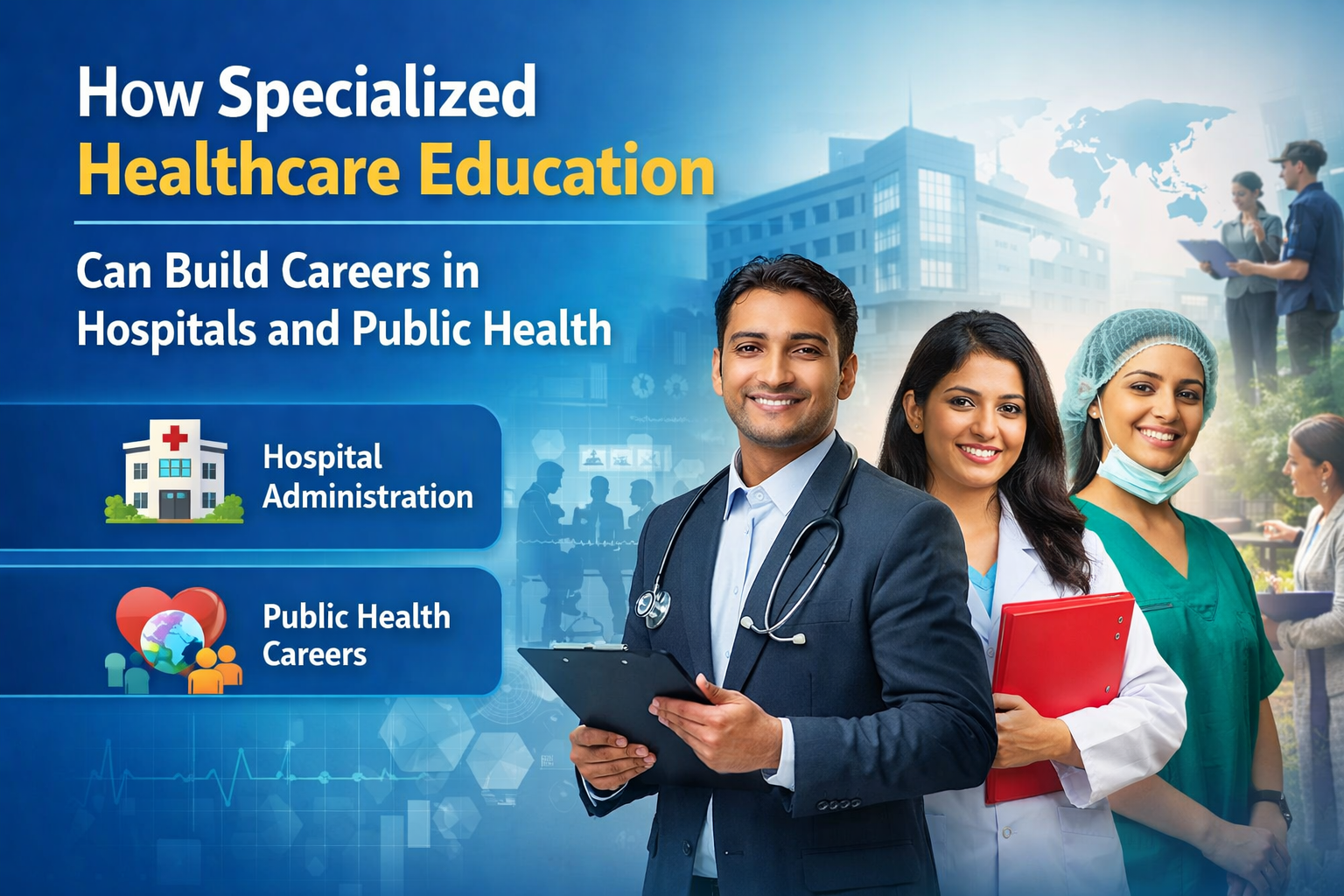
The healthcare industry is evolving rapidly. With rising patient expectations, expanding healthcare infrastructure, and growing public health challenges, the need for trained healthcare professionals is higher than ever. Today, healthcare systems require more than doctors and nurses—they need skilled administrators, public health experts, and healthcare managers who can efficiently run hospitals and design health programs for communities.
This is where specialized healthcare education plays a crucial role. Programs in hospital administration and public health are designed to equip students with the knowledge and skills required to manage healthcare organizations and improve population health outcomes. Institutions like AIHMS (Athar Institute of Health and Management Studies) are helping prepare the next generation of healthcare leaders through focused academic training and practical exposure.
The Growing Need for Healthcare Management Professionals
Healthcare is no longer limited to clinical treatment. Modern healthcare systems involve complex operations such as hospital management, healthcare policy, epidemiology, community health planning, and healthcare financing.
As hospitals expand and governments focus more on public health initiatives, there is a growing demand for professionals who understand both healthcare and management. These experts help ensure that healthcare services are delivered efficiently, safely, and effectively.
Healthcare administrators and public health professionals play vital roles in:
-
Managing hospital operations and departments
-
Designing public health programs
-
Improving healthcare quality and patient safety
-
Managing healthcare budgets and resources
-
Implementing healthcare policies and regulations
-
Leading healthcare teams and organizations
Specialized healthcare education prepares students to take on these responsibilities with confidence.
Career Opportunities in Hospital Administration
Hospitals are complex organizations that require efficient management to function smoothly. From managing staff and finances to ensuring compliance with healthcare regulations, hospital administrators are responsible for maintaining high standards of healthcare services.
Students interested in this field can pursue Hospital Administration programs that focus on healthcare management, hospital operations, healthcare laws, medical ethics, and healthcare finance.
A Masters in Hospital Administration (MHA) provides in-depth training for leadership roles in healthcare institutions. Those interested in advancing their careers in this field can explore the Masters in Hospital Administration program.
Career roles in hospital administration include:
-
Hospital Administrator
-
Healthcare Manager
-
Operations Manager in Hospitals
-
Medical Office Manager
-
Healthcare Quality Manager
-
Health Services Manager
These professionals work in hospitals, private clinics, diagnostic centers, healthcare consulting firms, and large healthcare networks.
Opportunities in Public Health Careers
Public health focuses on improving the health of communities rather than just treating individual patients. It involves preventing diseases, promoting healthy lifestyles, and managing health programs that benefit large populations.
Public health professionals work closely with governments, NGOs, healthcare organizations, and international health agencies to address major health challenges such as infectious diseases, lifestyle disorders, maternal health, and environmental health issues.
Students who want to contribute to community health and policy-making can pursue a Public Health degree. Programs like the Masters in Public Health (MPH) train professionals in epidemiology, biostatistics, health policy, environmental health, and health program management.
For students interested in building careers in community health and healthcare policy, the Masters in Public Health program is available at AIHMS
Career roles in public health include:
-
Public Health Officer
-
Epidemiologist
-
Health Program Manager
-
Community Health Specialist
-
Health Policy Analyst
-
NGO Health Coordinator
Public health professionals work with government health departments, research organizations, NGOs, international health agencies, and healthcare institutions.
Why Specialized Healthcare Education Matters
Healthcare education that combines management knowledge with healthcare understanding is essential in today’s complex medical environment. Specialized programs prepare students with practical skills that are directly applicable to real-world healthcare challenges.
Key benefits of specialized healthcare education include:
1. Industry-Relevant Skills
Students gain knowledge about healthcare systems, hospital operations, health policies, and healthcare management practices.
2. Leadership Development
Healthcare programs train students to become effective leaders who can manage teams and healthcare facilities.
3. Diverse Career Opportunities
Graduates can work in hospitals, public health organizations, healthcare startups, NGOs, and international health agencies.
4. Contribution to Society
Healthcare professionals contribute to improving patient care, community health, and overall healthcare quality.
Learning Healthcare Leadership with AIHMS
Choosing the right institute is an important step toward building a successful healthcare career. The AIHMS (Athar Institute of Health and Management Studies) offers specialized programs designed to meet the growing demand for healthcare management professionals.
The institute focuses on providing practical knowledge, experienced faculty guidance, and industry-relevant training that prepares students for real-world healthcare challenges.
Students who want to explore healthcare management education can learn more about the institute at
https://www.aihms.in.
Through specialized programs in hospital administration and public health, AIHMS helps students develop the expertise required to succeed in the healthcare industry.
The Future of Healthcare Careers
India’s healthcare sector is expanding rapidly due to increased healthcare investments, growing population needs, and rising awareness of public health issues. This growth is creating strong demand for professionals who can manage healthcare institutions and develop effective health programs.
Specialized healthcare education plays a vital role in preparing professionals who can lead hospitals, manage healthcare systems, and improve community health outcomes.
By gaining the right knowledge and skills in healthcare management and public health, students can build meaningful careers while contributing to a healthier society.
Conclusion
Healthcare is one of the most impactful and rapidly growing sectors in the world. While doctors and nurses remain the backbone of healthcare systems, skilled administrators and public health professionals are equally essential for ensuring efficient healthcare delivery.
Specialized healthcare education in areas like hospital administration and public health equips students with the skills needed to manage healthcare institutions, design health programs, and improve healthcare outcomes.
With the right training and education from institutes like AIHMS, aspiring professionals can build rewarding careers in hospitals, healthcare organizations, and public health systems while making a significant difference in society.
