
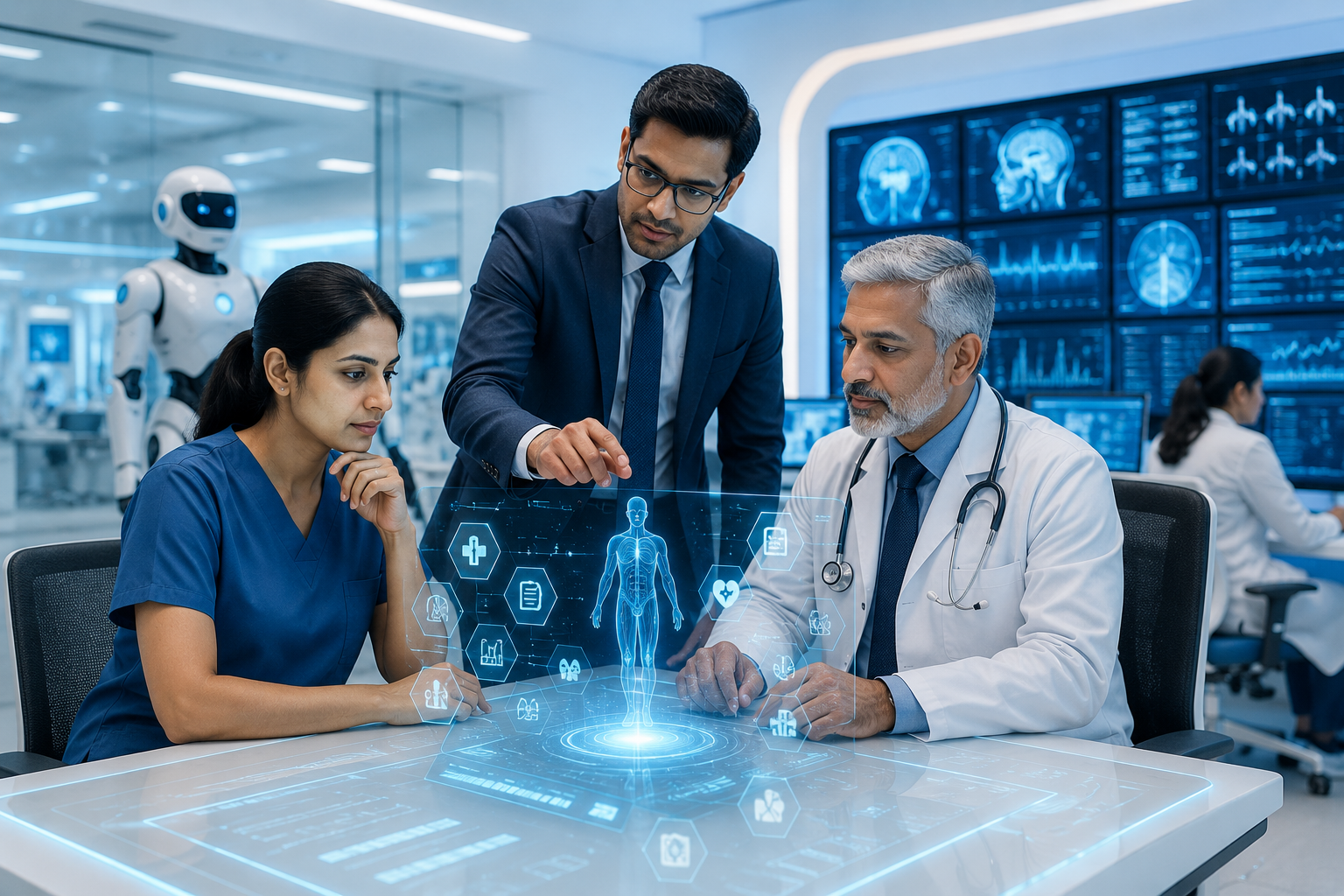
Healthcare is entering a new era where technology is no longer just a support system—it has become a strategic partner. Artificial Intelligence (AI) is revolutionizing the way hospitals operate, helping organizations improve efficiency, reduce costs, and enhance patient outcomes. Yet, despite these remarkable advancements, one fact remains unchanged: healthcare is ultimately about people.
The future of healthcare management is not about replacing healthcare professionals with machines. Instead, it is about combining the speed, accuracy, and analytical capabilities of AI with the experience, empathy, ethics, and leadership of human experts.
This collaborative approach—AI + Human Expertise—is emerging as the new model of healthcare management, enabling hospitals to deliver smarter, safer, and more patient-centered care.
Understanding AI in Healthcare Management
Artificial Intelligence refers to computer systems capable of analyzing data, recognizing patterns, learning from information, and supporting decision-making.
In healthcare management, AI is being used to improve both clinical and administrative processes, including:
- Hospital operations
- Patient scheduling
- Resource allocation
- Predictive analytics
- Medical imaging support
- Electronic Health Records (EHR)
- Inventory management
- Workforce planning
- Financial forecasting
- Quality improvement
Rather than replacing healthcare managers, AI acts as an intelligent assistant that enables faster and better-informed decisions.
Why Human Expertise Still Matters
Hospitals are complex organizations where every decision can directly affect patient lives.
While AI excels at processing enormous amounts of data, it cannot fully understand:
- Human emotions
- Cultural differences
- Ethical dilemmas
- Patient expectations
- Organizational relationships
- Compassionate communication
Healthcare leaders bring qualities that machines cannot replicate.
These include:
Emotional Intelligence
Healthcare managers support employees, communicate with families, resolve conflicts, and build trust within organizations.
Clinical Judgment
Experienced professionals understand situations that require flexibility beyond algorithmic recommendations.
Ethical Decision-Making
Healthcare decisions often involve balancing clinical outcomes, patient preferences, legal requirements, and organizational priorities.
Leadership
Successful healthcare organizations depend on leaders who inspire teams, manage change, and create a culture of continuous improvement.
How AI and Human Expertise Work Together
The strongest healthcare organizations do not choose between AI and people—they combine both.
1. Smarter Decision-Making
AI rapidly analyzes millions of data points.
Healthcare managers interpret these insights within real-world clinical and operational contexts.
Together, they make more accurate decisions.
2. Improved Patient Experience
AI can:
- Schedule appointments
- Reduce waiting times
- Send reminders
- Predict patient demand
Healthcare professionals contribute:
- Empathy
- Communication
- Personalized care
- Emotional support
The result is a better overall patient experience.
3. Better Resource Management
Hospitals must carefully manage:
- Beds
- Medical equipment
- Staff
- Operating rooms
- Medicines
AI predicts demand and identifies inefficiencies, while healthcare administrators make strategic decisions based on organizational priorities.
4. Stronger Quality and Patient Safety
AI helps identify:
- Medication errors
- Infection trends
- Readmission risks
- Clinical quality indicators
Healthcare quality teams investigate these findings and implement improvements.
5. Faster Crisis Response
During emergencies such as pandemics or natural disasters, AI provides:
- Real-time dashboards
- Disease forecasting
- Resource tracking
- Predictive modeling
Healthcare leaders coordinate teams, communicate with stakeholders, and make critical operational decisions.
Benefits of the AI + Human Expertise Model
Hospitals adopting this collaborative approach experience several advantages.
Increased Operational Efficiency
Routine administrative tasks become faster through automation.
Better Clinical Outcomes
Data-driven insights support earlier interventions and more informed decisions.
Enhanced Patient Satisfaction
Technology improves convenience, while human professionals provide compassionate care.
Reduced Healthcare Costs
Optimized resource utilization minimizes waste and improves financial performance.
Improved Employee Productivity
Healthcare workers spend less time on repetitive administrative work and more time caring for patients.
Challenges of AI Integration
Although AI offers tremendous potential, hospitals must overcome several challenges.
Data Privacy and Security
Healthcare organizations handle highly sensitive patient information.
Strong cybersecurity and compliance measures are essential.
Staff Training
Employees must learn how to effectively use AI-powered tools and digital technologies.
Ethical Concerns
Healthcare leaders must ensure AI systems remain transparent, unbiased, and accountable.
Technology Adoption
Successful implementation requires careful planning, change management, and continuous evaluation.
These challenges highlight why human leadership remains essential even in highly digital healthcare environments.
The Evolving Role of Healthcare Managers
Healthcare managers are becoming digital leaders.
In addition to traditional management responsibilities, they increasingly oversee:
- Digital transformation initiatives
- AI implementation projects
- Health information systems
- Data-driven decision-making
- Innovation management
- Cybersecurity governance
- Digital quality improvement
Tomorrow’s healthcare leaders must understand both management principles and emerging technologies.
Skills Future Healthcare Managers Need
To thrive in AI-enabled healthcare organizations, professionals should develop competencies in:
Leadership
Leading multidisciplinary teams through technological change.
Digital Literacy
Understanding AI, healthcare analytics, telemedicine, and digital health platforms.
Data Interpretation
Making evidence-based decisions using healthcare analytics.
Strategic Thinking
Aligning technology investments with organizational goals.
Communication
Helping employees and patients adapt to digital transformation.
Change Management
Managing organizational transitions effectively.
Ethical Leadership
Ensuring technology enhances rather than compromises patient care.
Career Opportunities in AI-Driven Healthcare Management
As hospitals embrace AI, demand is growing for professionals with both healthcare and digital management expertise.
Emerging roles include:
- Hospital Administrator
- Digital Health Manager
- Healthcare Operations Manager
- Health Informatics Specialist
- Healthcare Analytics Manager
- Quality Improvement Manager
- Clinical Operations Manager
- AI Implementation Coordinator
- Healthcare Innovation Consultant
- Chief Digital Health Officer
These careers combine healthcare knowledge with technology and leadership skills.
Preparing for the Future
Healthcare education is evolving to prepare future leaders.
Programs such as:
- Masters of Hospital Administration (MHA)
- Masters in Public Health (MPH)
- Healthcare Management Certifications
- Digital Health Programs
are increasingly incorporating subjects such as:
- Artificial Intelligence
- Health Informatics
- Healthcare Analytics
- Digital Transformation
- Healthcare Quality
- Strategic Leadership
Students who develop both management and digital competencies will have a competitive advantage in the healthcare industry.
The Future of Healthcare Management
The hospitals of tomorrow will be smarter, more connected, and increasingly data-driven.
However, technology alone cannot create exceptional healthcare.
The future belongs to organizations where Artificial Intelligence enhances—not replaces—human expertise.
Healthcare managers will continue to play a central role in ensuring that technology serves its true purpose: improving patient care, empowering healthcare professionals, and building stronger healthcare systems.
Conclusion
Artificial Intelligence is transforming healthcare management, but it is not replacing healthcare leaders. Instead, it is empowering them to make faster, smarter, and more informed decisions.
The future of healthcare lies in collaboration between advanced technology and experienced professionals. AI provides the intelligence; humans provide the judgment, empathy, leadership, and ethical decision-making that define quality healthcare.
For aspiring healthcare managers, developing skills in both management and digital health will be essential for leading the hospitals of the future.
The new model of healthcare management is not AI versus Humans—it is AI with Human Expertise.
Frequently Asked Questions (FAQs)
1. Will AI replace healthcare managers?
No. AI supports healthcare managers by providing data-driven insights, while human professionals continue to make strategic, ethical, and patient-centered decisions.
2. How is AI used in healthcare management?
AI is used for predictive analytics, hospital operations, scheduling, resource management, healthcare analytics, electronic health records, quality improvement, and decision support.
3. Why is human expertise still important in healthcare?
Human expertise provides empathy, ethical judgment, leadership, communication, and clinical understanding that AI cannot fully replicate.
4. What skills should future healthcare managers develop?
Future healthcare managers should build leadership, digital literacy, healthcare analytics, communication, strategic planning, and change management skills.
5. Is AI creating new career opportunities in healthcare management?
Yes. AI is creating roles in digital health, healthcare analytics, health informatics, AI implementation, hospital operations, and healthcare innovation.
